

Reconstruction of the Deba Bridge: ephemeral engineering in the service of historical heritage
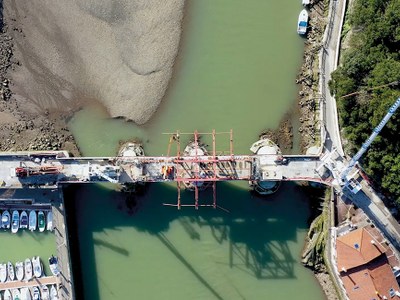
The case of the Deba-Mutriku Bridge, built between 1863 and 1866 and part of the Camino de Santiago route, illustrates how such solutions make it possible to successfully undertake delicate conservation operations. On 5 July 2018, the bridge suffered a critical structural failure: pier number two settled and rotated by up to 70 cm due to the weakening of its foundations caused by the action of bivalve microorganisms. This displacement caused the failure of two adjoining vaults and left the bridge on the verge of collapse.
The directive set by the Gipuzkoa Provincial Council was clear: reconstruct the bridge exactly as it was; preserve its historical value without the intervention being perceptible, and without being able to work beneath the structure.
The success of the restoration was recognised in June 2023, when the project received the Europa Nostra Grand Prix, one of the most prestigious awards in the field of European cultural heritage conservation.
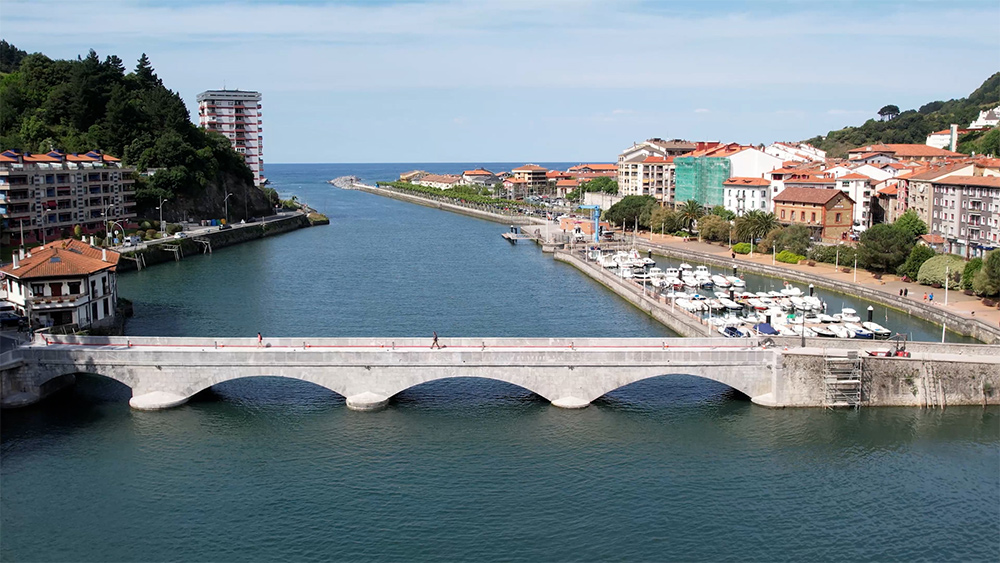
“The most decisive challenge was ensuring that, as with artistic heritage restoration, the intervention would remain invisible”.
JAVIER LEÓN
Project Director [Fhecor Ingenieros Consultores]
RECOVERING NINETEENTH-CENTURY CONSTRUCTION KNOWLEDGE
One of the first steps was to investigate how the bridge had originally been built. The team studied nineteenth-century techniques in order to integrate them with current methods. This combination of historical knowledge and modern technical expertise proved essential in achieving a faithful reconstruction.
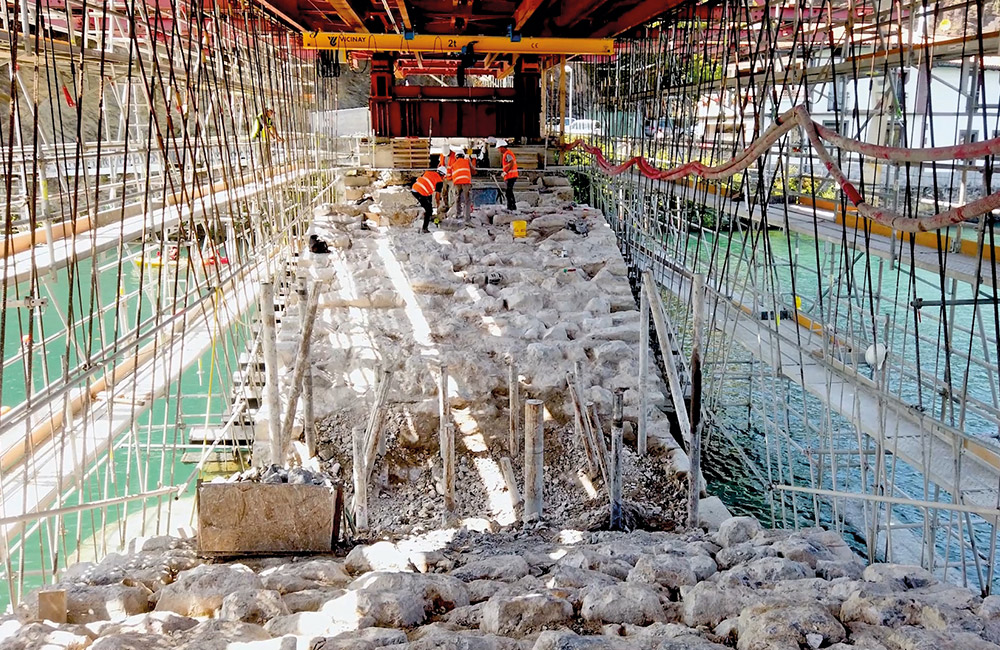
Another challenge was the bridge’s geometry. Over time, the structure had developed accumulated deformations that needed to be corrected without altering its final appearance. The process involved the controlled dismantling of 1,200 ashlar blocks, each individually catalogued and numbered to ensure accurate reassembly.
An anecdote during the dismantling process confirmed the validity of the method. On one of the stones, the number 33 was marked in blue by the current team, alongside the same number in red, inscribed in the nineteenth century. It was clear evidence that the same construction logic was being followed.
STRUCTURAL ENGINEERING UNDER EXTREME CONDITIONS
From the outset, the project was conceived in two phases. The first aimed to stabilise the structure and prevent collapse, while the second focused on the definitive reconstruction.
This approach avoided duplication and made it possible to optimise resources. Piers one and three were underpinned to ensure the stability of the structure throughout the intervention. The BRIO scaffolding platform transformed the space beneath the bridge into a protected working environment, similar to an industrial facility, enabling precise operations and improving execution conditions.
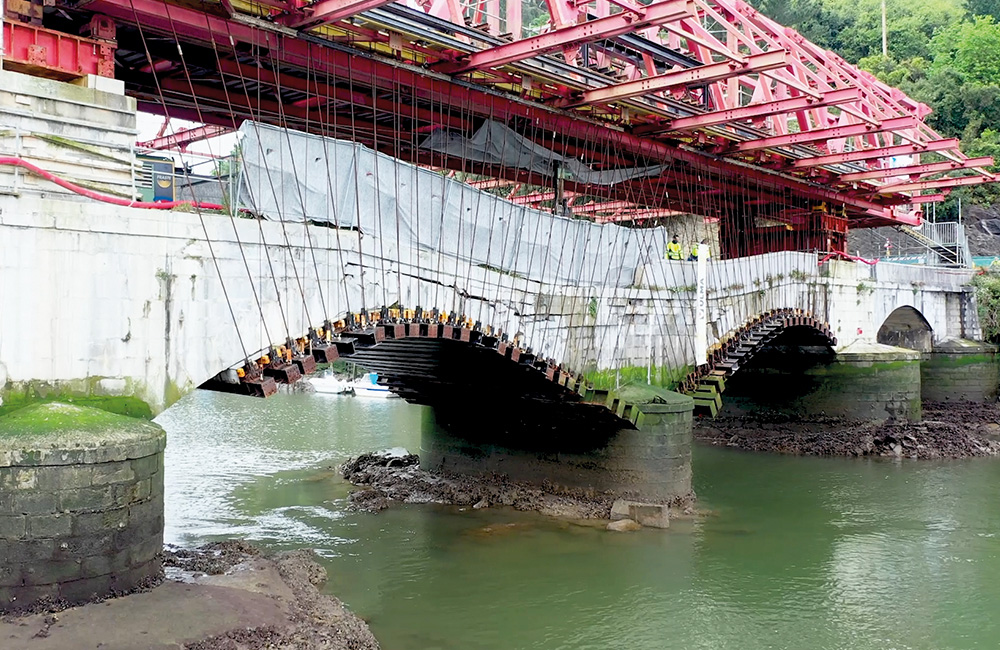
The intervention required a non-conventional shoring system. The site presented challenging conditions: a channel with four-metre tidal variation and soft ground that prevented the use of traditional shoring. The solution was to suspend the bridge from an overhead structure rather than support it from the ground.
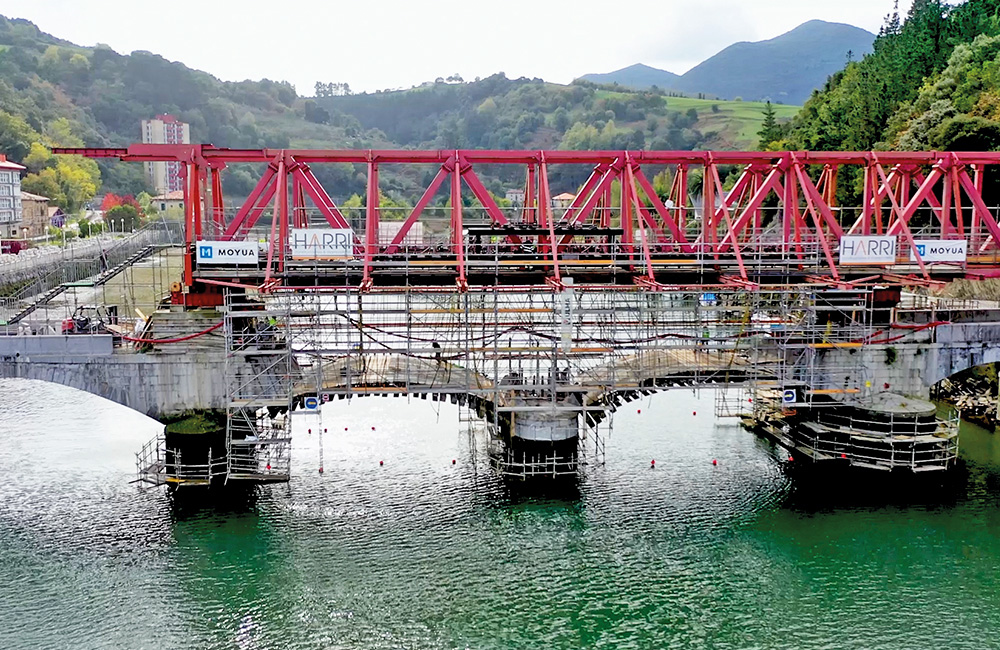
On piers 1 and 3, reinforced with micropiles, a high-capacity CA55 self-launching shoring was installed, from which modular formwork panels were suspended using dywidag bars arranged radially. Each bar could be adjusted independently, allowing the bridge load to be progressively transferred to the support system. In this way, the structure was fully suspended, allowing the damaged vaults to be dismantled and reconstructed safely. This was a delicate operation: once the bars reached the required tension, almost 100 % of the bridge’s weight was suspended from the shoring system.
The formwork panels were preassembled on a nearby port platform, transported on barges and positioned under the bridge without exposing the workers to situations of risk. These elements were positioned with the aid of automated hoists and a purpose-designed overhead crane, which made it possible to handle loads with precision.
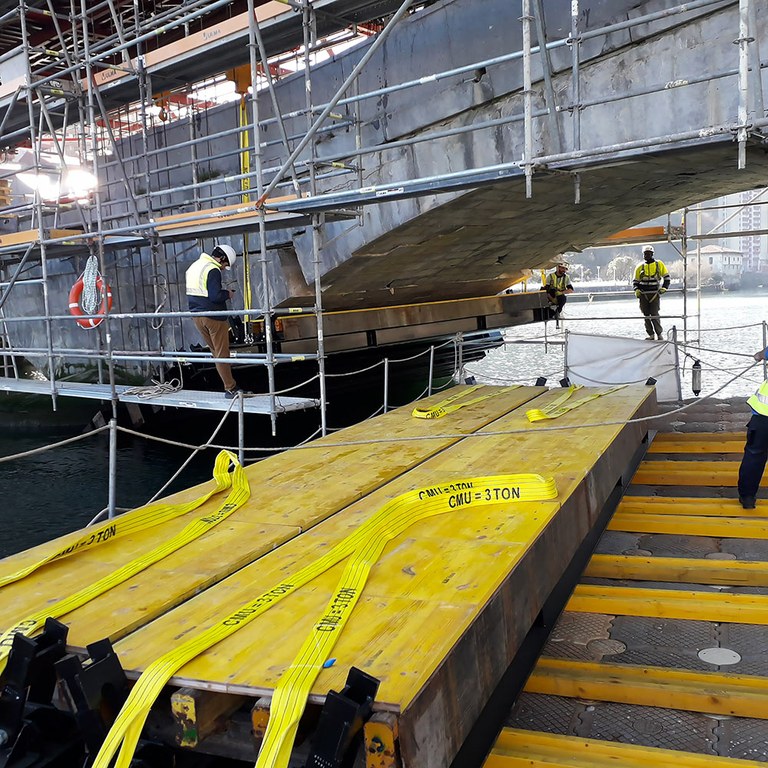
Once the structure had been secured, the team proceeded to reinstall the original pieces, which accounted for nearly 90 % of the total. The reconstruction was carried out course by course, adjusting each element with precision to restore the original geometry and rebuild the original arches. At this stage, the shoring striking process had to be carried out with the utmost precision: symmetrically upstream and downstream, and also longitudinally, with four teams working in coordination to ensure an even distribution of loads. This process made it possible for the bridge to recover its structural stability without visible alterations to its original appearance.
In November 2021, the arch once again began to carry load, signalling that the auxiliary structures were no longer required. The self-launching system was dismantled, returning full prominence to the restored bridge, now fully operation.
“It is a pleasure to work with ULMA, since that in addition to providing the means, they accompany you during the execution of the works”.
JOEL DE FRÍAS
CEO [Harri Construcciones y Mampostería]
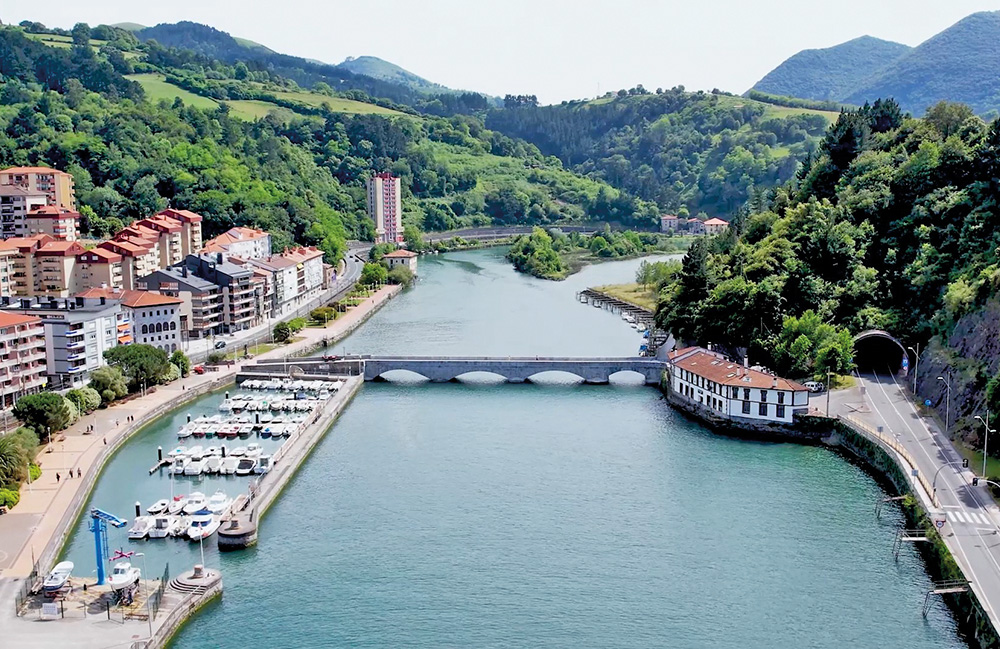
These two videos detail the key aspects and execution of the work: